
A mission of hope and opportunity
In the spirit of the Society of Jesus’ third Universal Apostolic Preference, “Journeying with Youth,” the Jesuits in Burundi are strengthening a Community Learning Centre (CLC) connected to the educational opportunities of Jesuit Worldwide Learning (JWL). The initiative particularly seeks to serve Burundians facing economic, social or geographical barriers to further learning. English can open access to research, digital resources, international cooperation and professional communication.
A structured pathway
The Global English Language (GEL) programme envisages six stages—A1, A2, B1, B1+, B2 and C1—aligned with the Common European Framework of Reference for Languages (CEFR). Placement assessments establish learners’ starting levels. B2 proficiency can support independent communication and preparation for some English-medium courses; C1 develops the advanced skills often needed for demanding university study. Neither GEL completion nor a placement-test result guarantees university admission or constitutes a Cambridge English Qualification.
Preparing educators and the sixth cohort
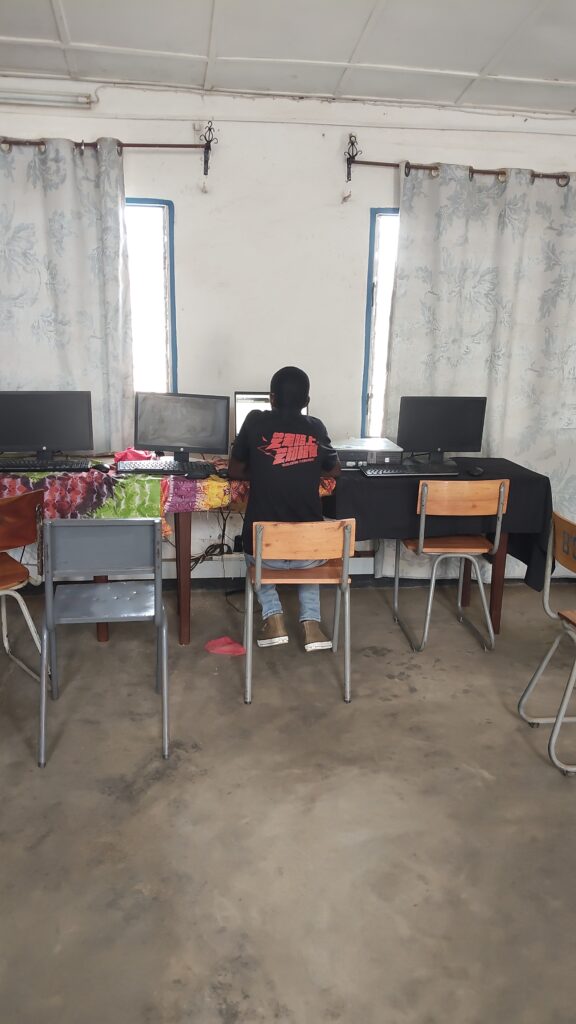
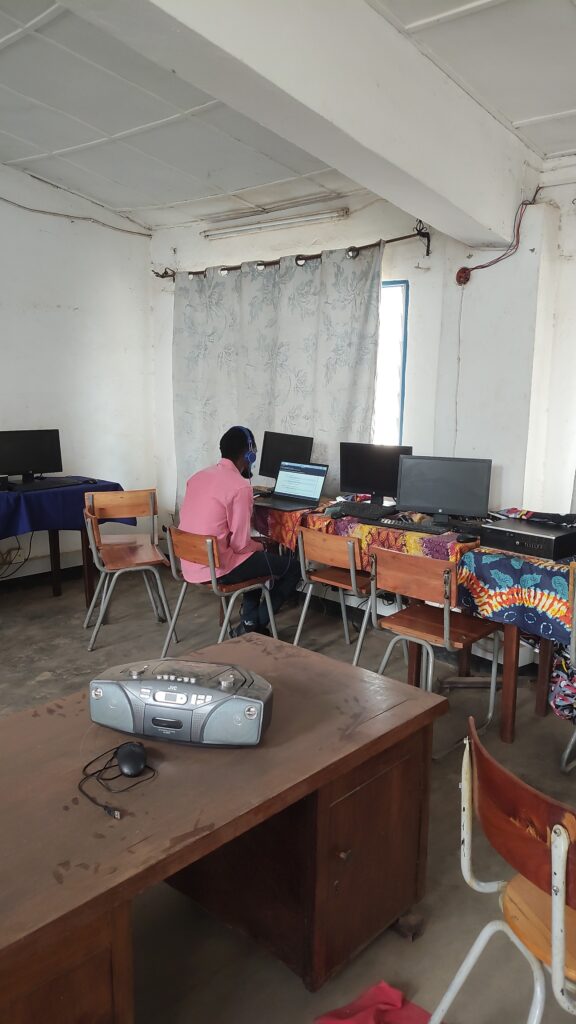
On 13th October 2026, five prospective teachers undertook a computer-based Cambridge placement assessment. Results will inform the selection of teachers, their assigned teaching levels and the preparation of instructional materials. Incoming students are expected to complete placement assessments the following week. The Burundi CLC plans to inaugurate its sixth cohort on 27 October 2026. The accompanying photographs document the assessment setting and individual participants at their computers.
Beyond English: academic opportunity


GEL may prepare eligible graduates to explore JWL professional and academic programmes, as well as online or campus-based studies at Jesuit and other universities. Cambridge-related assessment opportunities, where available under applicable arrangements, may provide independent evidence of English proficiency. Cambridge B2 First and C1 Advanced are separate examinations, requiring registration and assessment through authorised providers. Each university determines accepted tests, scores, academic prerequisites and funding conditions.
Accompaniment for a hopeful future
The CLC hopes eventually to help graduates identify credible programmes, interpret admission requirements, prepare applications and seek scholarships. Such guidance would not guarantee admission or financial assistance. It would, however, embody Jesuit education’s commitment to dignity, inclusion and service: ensuring that language and circumstance do not unnecessarily close doors to talent.
By Pierre Nyandwi, SJ.